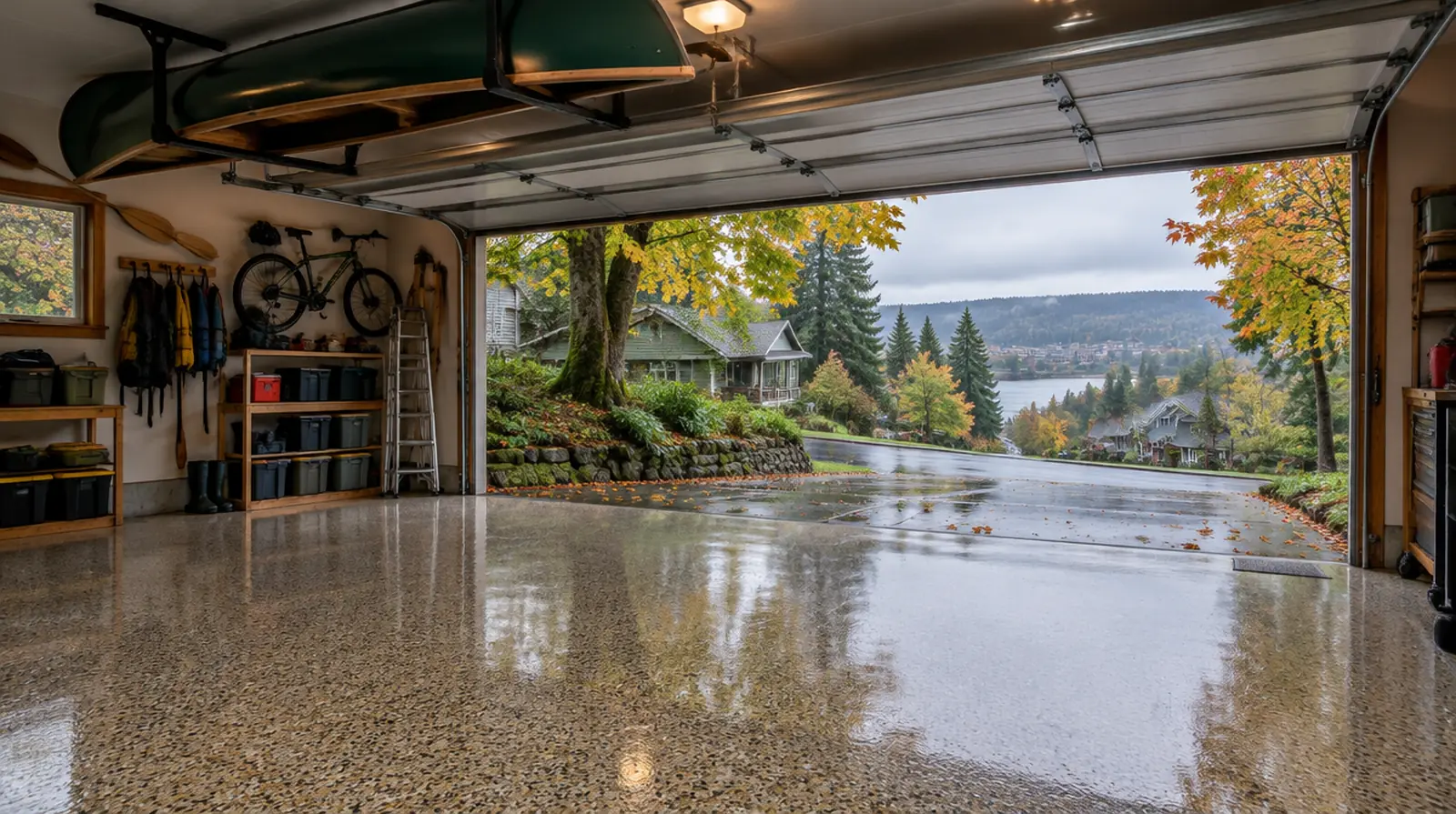
What polyaspartic offers
Polyaspartic is an aliphatic polyurea, a high-performance resin that cures much faster than traditional epoxy and stays clear and color-stable in sunlight. For homeowners, the biggest benefit is time. A garage that would take several days with conventional products can often be finished and walkable in a single day.
Here, polyaspartic has another advantage: it cures well at lower temperatures. Traditional epoxy slows dramatically below about 55 degrees, which describes many garages for half the year. Polyaspartic keeps working in cooler conditions, so projects do not have to wait for summer.
Benefits
- Fast return to use. Foot traffic the same day in many cases, vehicles within a day or two.
- Cool-weather performance. Reliable cure in chilly garages and shops.
- UV stability. No yellowing on sunny porches or in garages with open doors.
- Hardness. Excellent resistance to abrasion, chemicals and hot tires.
- Low odor options. Formulations suitable for occupied homes and businesses.
Doing it right
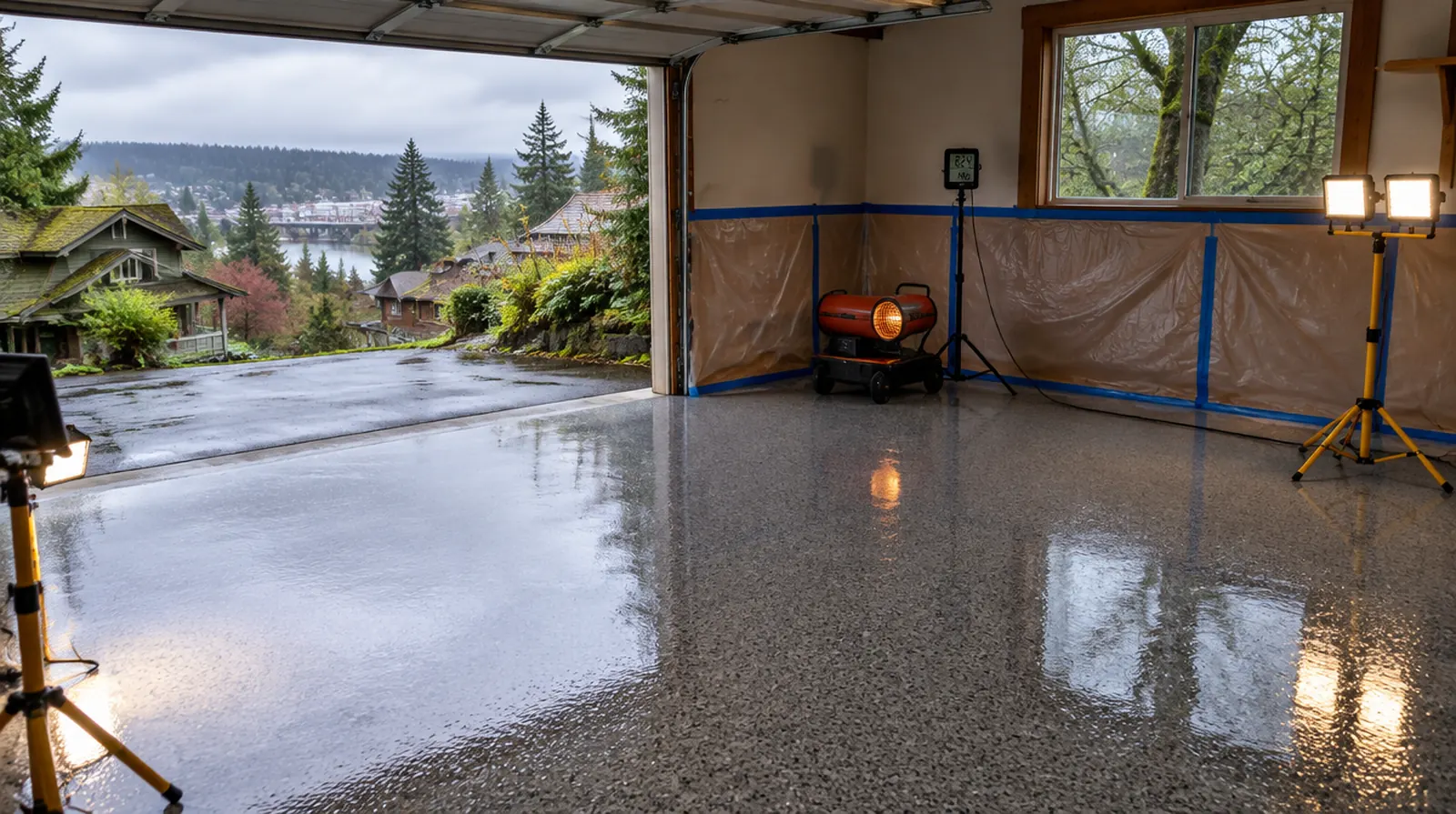
The same speed that makes polyaspartic attractive also makes it unforgiving. It begins to set within minutes of mixing, so the crew must work quickly and precisely. Surface prep has to be thorough because the material has less time to soak into the concrete. We grind every slab, repair defects and usually use a penetrating primer for deep bonding. We monitor humidity and dew point closely, since moisture in the air can affect how the coating cures.
That is why we discourage do-it-yourself polyaspartic. The product is excellent, but it needs experience to apply evenly without lap marks, bubbles or weak spots.
A typical schedule
- Grinding, crack repair and cleanup in the morning.
- Primer and base coat with flake broadcast by midday.
- Scraping, vacuuming and clear topcoat in the afternoon.
- Walk on it that evening or the next morning, depending on temperature.
On very cold or humid days, or when repairs are extensive, we may spread the work over two days. You will know the plan in advance.
Where we use it
Polyaspartic is our usual choice for residential garages, covered porches, sunrooms, basements and businesses that need minimal downtime, such as cafes, retail shops and offices. It is also used over metallic and quartz systems as a protective topcoat.
Finishes
Clear over flake is the most common, but polyaspartic can also be tinted for a solid color or used over decorative systems. Gloss and satin are both available, and texture can be added for traction. Light colors stay true over time because the coating does not amber.
Maintenance
Sweep, squeegee water and mop with a mild cleaner. Clean spills promptly. When the topcoat eventually shows wear, it can be scuff-sanded and recoated. Pair it with a flake broadcast for the best combination of looks and grip. If an older coating has yellowed or peeled, see our repair services.
Cost compared with epoxy
Polyaspartic materials cost more than standard epoxy, and installation requires more skill. In exchange, you get faster turnaround, cool-weather flexibility, UV stability and a harder surface. For most garages here, those benefits are worth it. Your estimate can include both options so you can compare.
Polyaspartic over older slabs
Older garages in established neighborhoods often have slabs poured decades ago, sometimes with patches, worn surfaces and no vapor barrier underneath. Polyaspartic can perform beautifully on those floors, but only after the right preparation. We grind away the weak surface layer and any old paint, fill spalls and pits with a fast-setting repair mortar, and test for moisture before choosing a primer. Where readings are high, we lay down a moisture-tolerant epoxy primer first and then build the polyaspartic system on top of it. That hybrid approach gives you the speed and toughness of polyaspartic with the bonding strength the older concrete needs. We will explain exactly which layers your floor gets and why before work starts, so the quote is clear and there are no surprises halfway through the job or after the floor goes back into daily use.
to book a fast-cure floor.
Call (541) 243-7117 for a free estimate.