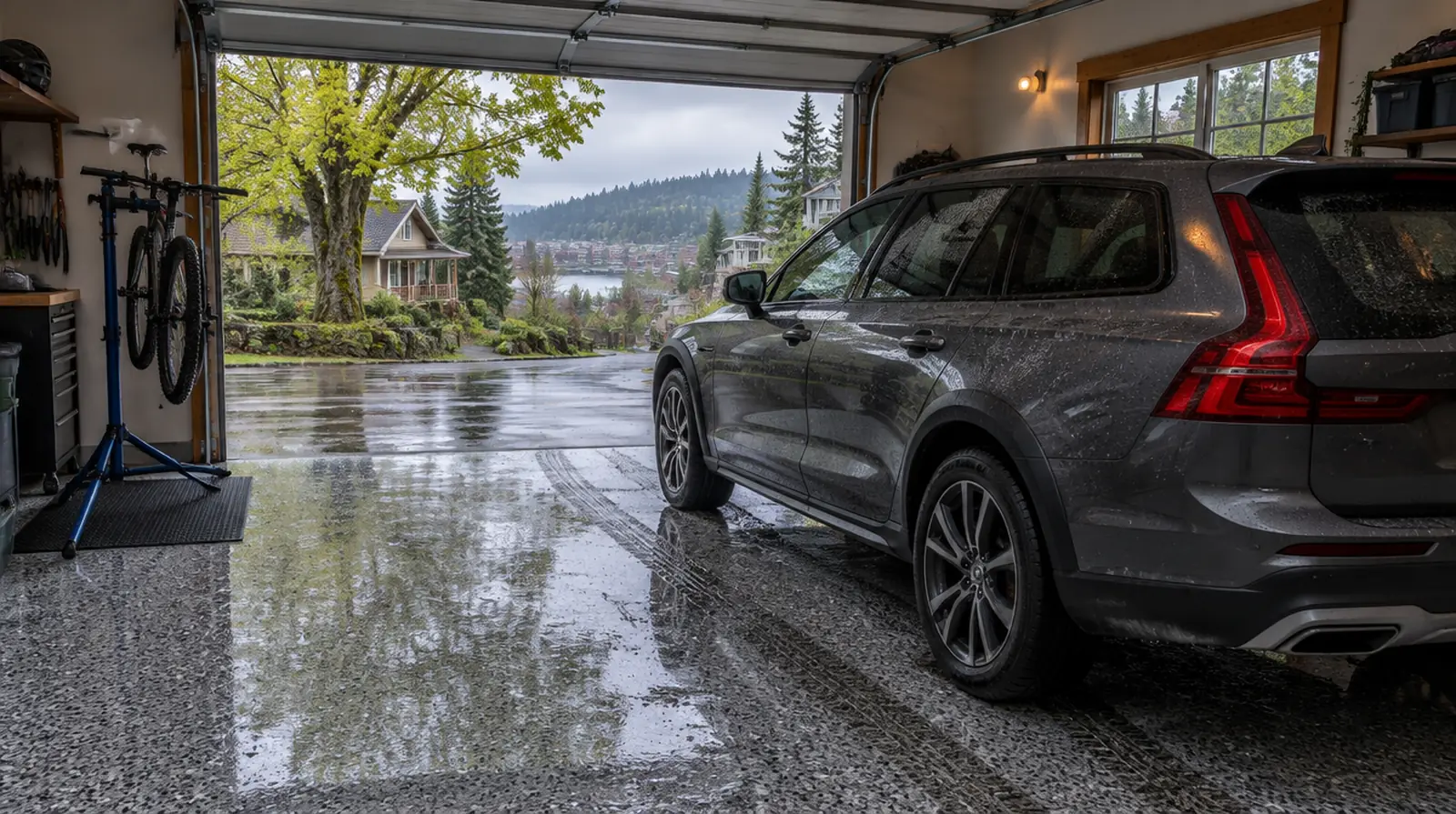
The trouble with bare concrete in a wet climate
From the first fall storms until late spring, garages in the valley rarely get a chance to dry out. Every trip in the car brings a fresh sheet of water off the tires and wheel wells. That water carries road grime, tiny gravel and oils into the pores of the concrete, and it pools in low spots near the drain or door. Mildew and green algae creep in along the edges. When summer finally arrives, the slab dries out, and the residue left behind turns to a dusty film that tracks into the house.
Many older garages here were poured without a vapor barrier, so moisture also rises from below during the wet months. You can sometimes see dark, damp patches spread across the floor on cold mornings. Those slabs are prone to efflorescence, a white powder left as water evaporates and leaves minerals behind. A coating applied without accounting for that moisture will blister and peel, which is why so many store-bought kits fail here.
Our preparation
Every garage we coat is ground with a diamond grinder connected to a dust extraction vacuum. Grinding removes weak surface material, old paint, sealer and efflorescence, and leaves a clean, rough profile for the primer to grab. Etching with acid does not do the same job and often leaves residue behind.
Next, we deal with damage. Cracks are opened and filled, chipped control joints are rebuilt, and pitted or flaking sections are patched and ground smooth. Older floors that slope unevenly or have low spots can be partially leveled so water drains toward the door instead of collecting under the car.
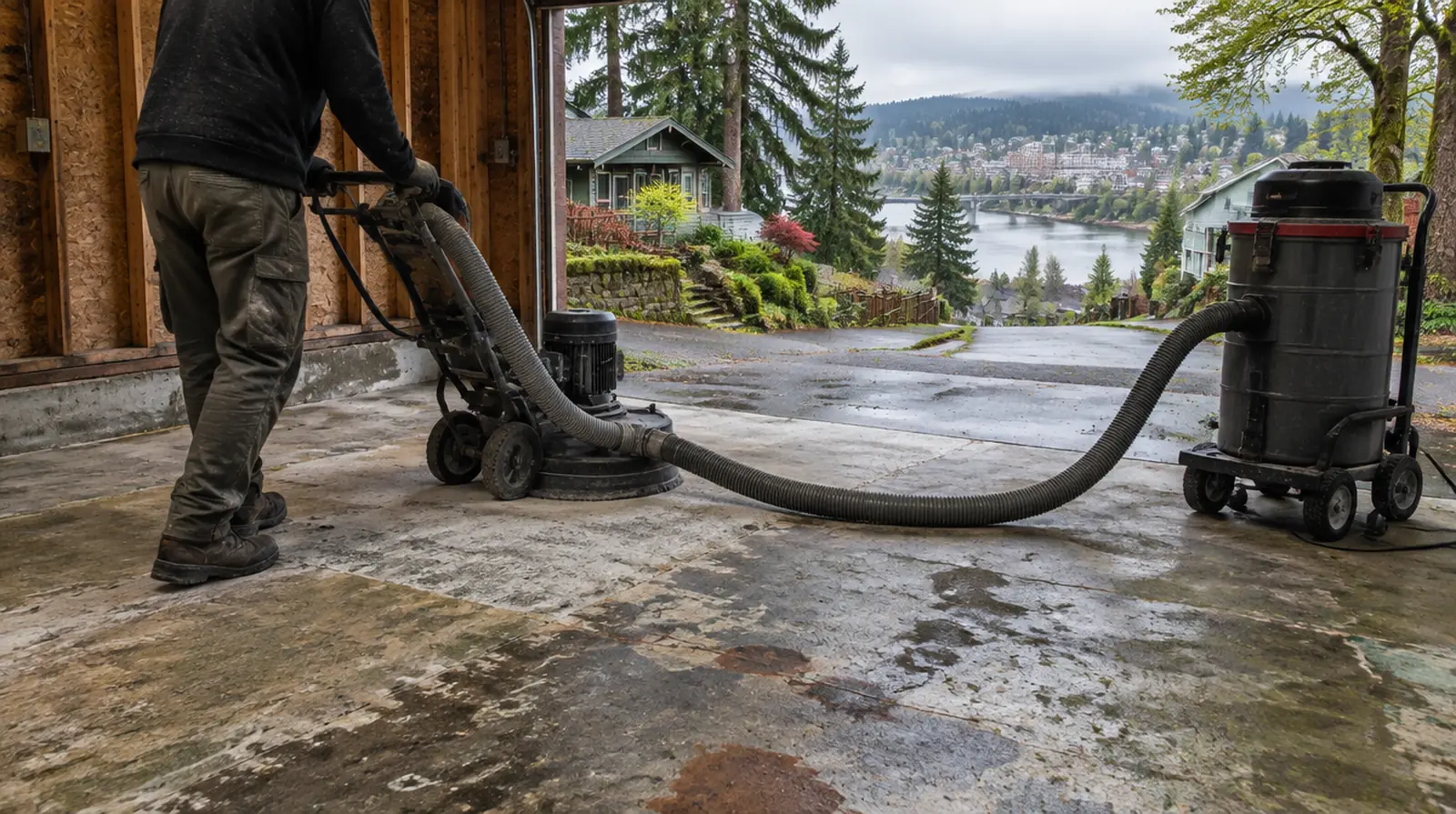
Moisture testing and the right primer
Before we quote, we test the slab for moisture. On dry slabs, a standard penetrating epoxy primer is all that is needed. On damp slabs, which are common in older homes and in winter, we use a moisture-mitigating primer designed to handle vapor pressure from below. It adds some cost, but it is the difference between a floor that lasts and one that bubbles within a year.
The coating system
- Primer: penetrates the ground concrete and creates the bond.
- Base coat: pigmented resin that builds thickness and color.
- Flake: vinyl chips broadcast for texture and traction, or a solid finish if preferred.
- Topcoat: clear polyaspartic or urethane for chemical, scuff and UV resistance.
Most garages are finished in one or two days. Cool, damp weather can lengthen cure time, so we use products and heaters that keep the schedule realistic. Walking is usually fine after a day, and cars can return after a few more.
Traction on a wet floor
A smooth, glossy coating can be slippery with water on it, and that matters in a place where cars come in wet half the year. We recommend a full flake broadcast for texture, and we can add a fine aggregate to the topcoat for more grip. The goal is a floor that is easy to squeegee and still safe to walk on in socks or sandals.
Life with a coated garage
The difference is obvious the first rainy week. Water sits on the surface and can be pushed out the door with a floor squeegee in a minute. Bike chain grease and oil wipe away. Fir needles and leaves blow out easily. The brighter floor reflects light, which helps on dark winter afternoons, and the room becomes a better place for a workbench, a home gym or a bike workshop.
Many homeowners also notice less dust in the house, since the garage floor is no longer powdering. And a finished garage floor stands out when you sell, especially in a market where buyers value storage and workspace.
Color choices
Light gray, blue and white blends brighten dim garages and hide road grit. Darker gray and black blends conceal tire marks. Earthy browns and tans suit homes with natural wood exteriors. We bring sample boards so you can compare under your lights.
Care
Squeegee water out after heavy rain, sweep or blow off debris, and mop with a mild cleaner every so often. Wipe oil and chemicals before they sit. Place plywood under kickstands and jack stands. That simple routine keeps the floor looking good for years. If you already have a failing coating, visit our repair page, or compare a quick polyaspartic system.
to schedule your garage estimate.
Call (541) 243-7117 for a free estimate.